Thursday, May 13, 2010

Influencing Photographers


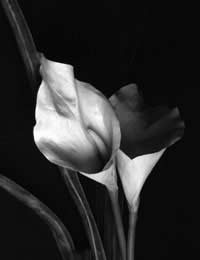
The photography of Imogen Cunningham is quiet delicate and feminine. She captures the fragility and essence of plants, the female form and other still life objects. I have chosen these two images because I am inspired by their illuminated form and the intimacy of each shot. The texture and shape of these objects is emphasised by a light source to the side. the images are close up and focus the viewers attention on the form of the subject matter. Some of Imogen's photographs are so close they are almost abstract. I like this idea of abstraction. Photographing an object so close that the context for which the objects exists is partly lost. It is purely the object represented in an ambiguity of formal elements. The mind has to analyse the elements carefully first then arrange them to make sense. I like the disorientating effect of close ups. The viewer has to think what is it? where was it taken? who owned it? what was happening at the time?


Final Presentation Experiments


These are a series of photographs I took for my final folio. They are mostly experimentation's with light and different compositions. This is just a quick taste of the direction my project is heading and the progress I have made. These unedited images illustrate my interest in geometric forms, still life and junk art.

Friday, May 7, 2010

Extending My Folio Ideas

I originally wanted to take my photographs at night so that I could experiment with Shadow and slow shutter speeds. However after some experimentation I decided that the best light was in the afternoon or early morning. I decided to abandon the idea of dark mysterious photographs and instead focus on line, form, colour and geometric shapes.

My Photography Folio Ideas

I have decided that my final photography folio will document the existence of ephemeral sculptural forms. The sculptural forms I am referring to, are those that intrude our foot paths and nature strips momentarily, then disappear from our urban environment as if they had never existed. Most people are more familiar with the term council collection pick up or throw out days.
After much exploration of different locations, subject matter and concepts within my environment, I found myself mostly intrigued not by people or places, but instead the masses of junk objects thrown out into the street. When searching for inspiration I became bored by the mundane, regular and predictable aesthetic of my neighbourhood. I just could not find something that moved me enough to stop and take a photograph.
While driving home late one night I noticed looming ambiguous objects in the shadows of streetlights. I wanted to return the next night to photograph the objects but unfortunately most of them were gone. I was inspired because I had appreciated these object for their unusual geometrical form and temporary status.
My idea developed as I contemplated the concept of unlikely and unintentional 'art'. I wondered how many people, if any, ever stop as I do to appreciate the oddities of routine everyday life. I began to think about Dada art, junk art and junk art sculpture. Artists such as; Tony Cragg, Marciel Duchamp & Fiona Hall.

Thursday, April 22, 2010

Experimentation


These photographs I took as an experimentation at home. I explored the possibilities of using slow shutter speeds and unnatural light sources to exaggerate form and heighten contrast.


Broken Glass


These were just a few experiments I took that I thought worked really well. I liked the combined effect of the glass, ceramic and water. I think the are interesting because of the the sharp lines and the effect of the illuminated white reflections that have been made. The images are almost gritty and textured, while still quite crisp and sharp.

Thursday, April 15, 2010

Camera RAW

Class Notes
Shooting with RAW files is recommended if the image is to be manipulated in some way in Adobe Photoshop. The RAW format keeps all of the original data when the image is uploaded to a computer. Therefore the RAW image is of the highest quality and ensures only minimal data is lost when the image is processed. When an image is converted to JPG, which is the standard format for digital images, some of the photograph's data is lost. This occurs so that photos are in a smaller file size and is necessary when putting photographs online. Shooting in RAW is recommended but not entirely necessary for our final presentation. However, if I wish to digitally manipulate my images in some way, using RAW files will make them a finer quality.